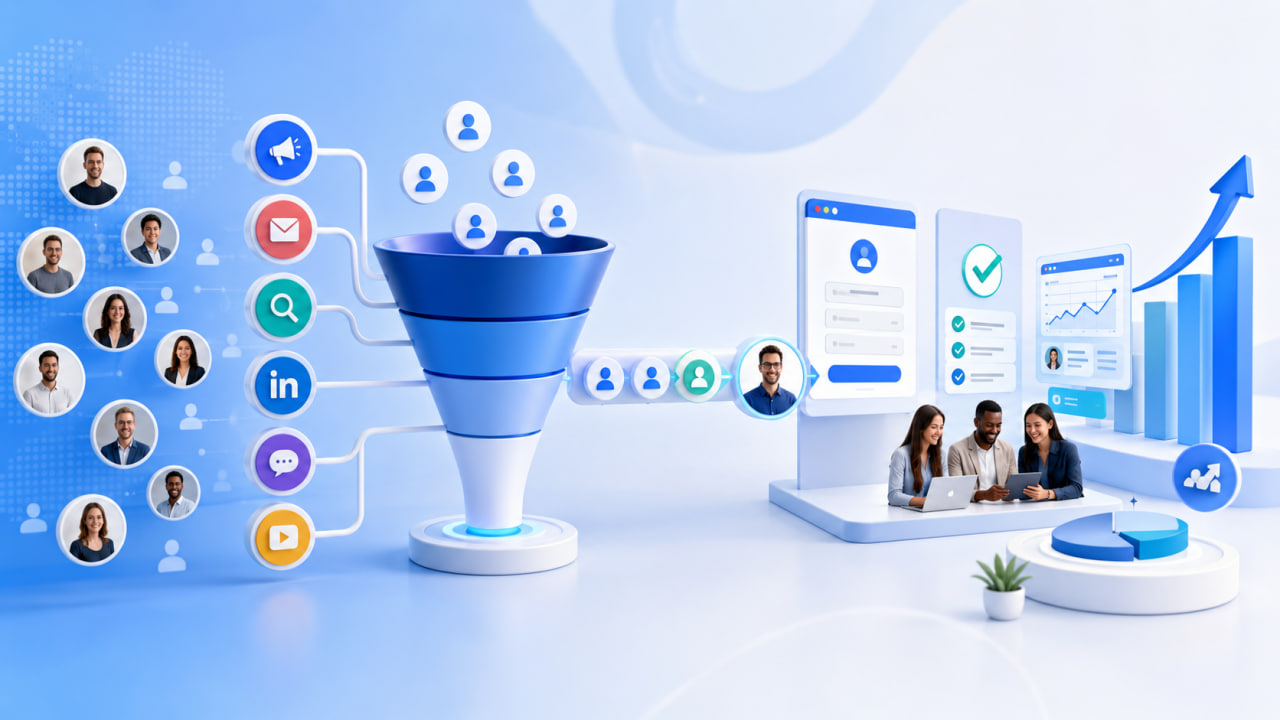
Customer acquisition for B2B technology companies is not just a traffic problem. More visitors, more ads, or more outreach do not automatically create more revenue. In 2026, buyers research quietly, compare options early, and involve multiple decision-makers before they are ready to speak with sales. A strong acquisition strategy helps the right buyer understand the value, trust the company, and take the next step with confidence.
The best acquisition systems are built around fit, timing, and proof. They define who the product is for, what pain is urgent, which channels can reach that audience, and what evidence the buyer needs before a demo, trial, or purchase. Without that structure, acquisition becomes expensive. The company may generate leads, but sales will struggle to convert them.
What Customer Acquisition Includes
| Area | Purpose | Business Value |
|---|---|---|
| Positioning | Clarify the audience, pain, promise, and proof | Improves message quality and conversion |
| Demand creation | Educate buyers before they are ready to buy | Builds trust and category awareness |
| Lead capture | Convert intent through demos, trials, guides, or consultations | Creates measurable sales opportunities |
| Sales enablement | Give sales context, proof, objections, and follow-up angles | Raises close rates and shortens sales cycles |
| Retention link | Acquire customers who can activate, adopt, and stay | Protects acquisition cost and lifetime value |
Acquire the Right Customers, Not Just More Customers
Good acquisition starts with a clear ideal customer profile. A poor-fit customer can look like growth at the beginning and become a cost later through churn, support load, low adoption, or weak expansion. Strong acquisition teams look beyond the first conversion and ask whether this customer can succeed with the product.
- Define the industries, roles, and company sizes with the strongest need.
- Separate high-intent buyers from casual researchers.
- Use content to answer objections before the sales call.
- Measure acquisition by pipeline, payback, retention, and expansion potential.
Build Conversion Paths Around Buyer Intent
Different buyers need different paths. Some are ready for a demo. Others need a comparison page, case study, pricing explanation, technical guide, or ROI calculator before they will engage. A strong website should support each stage instead of forcing every visitor into one generic contact form.
For technology brands, useful acquisition assets often include use-case pages, integration pages, product tours, industry pages, customer stories, security content, onboarding explainers, and sales-ready landing pages. These assets do more than attract attention. They reduce risk and help the buyer justify action internally.
Measure Acquisition as a Revenue System
Customer acquisition should be measured beyond cost per lead. The real questions are: which channels create qualified opportunities, which messages convert the right accounts, how long payback takes, and whether acquired customers stay. Useful metrics include CAC, conversion rate, lead-to-opportunity rate, close rate, sales cycle length, activation rate, retention, and customer lifetime value.
| Metric | What It Shows | Why It Matters |
|---|---|---|
| CAC | Cost to acquire a customer | Shows whether growth is efficient |
| Opportunity rate | How many leads become real sales opportunities | Reveals lead quality |
| Payback period | How quickly acquisition cost is recovered | Protects cash flow and scaling decisions |
| Retention | Whether customers continue using the product | Shows if acquisition attracts the right fit |
Turn Acquisition Into Scalable Growth
Scalable acquisition is built through learning. Search data shows what buyers ask. Campaign data shows what messages create action. Sales feedback shows what blocks deals. Customer success shows why accounts stay or leave. When these signals are used together, each campaign becomes sharper than the last.
If your technology brand wants customer acquisition that creates real revenue, start with strategy before spend. Clarify the customer, build the right conversion paths, measure beyond lead volume, and invest in the channels that bring customers who adopt, stay, and grow.