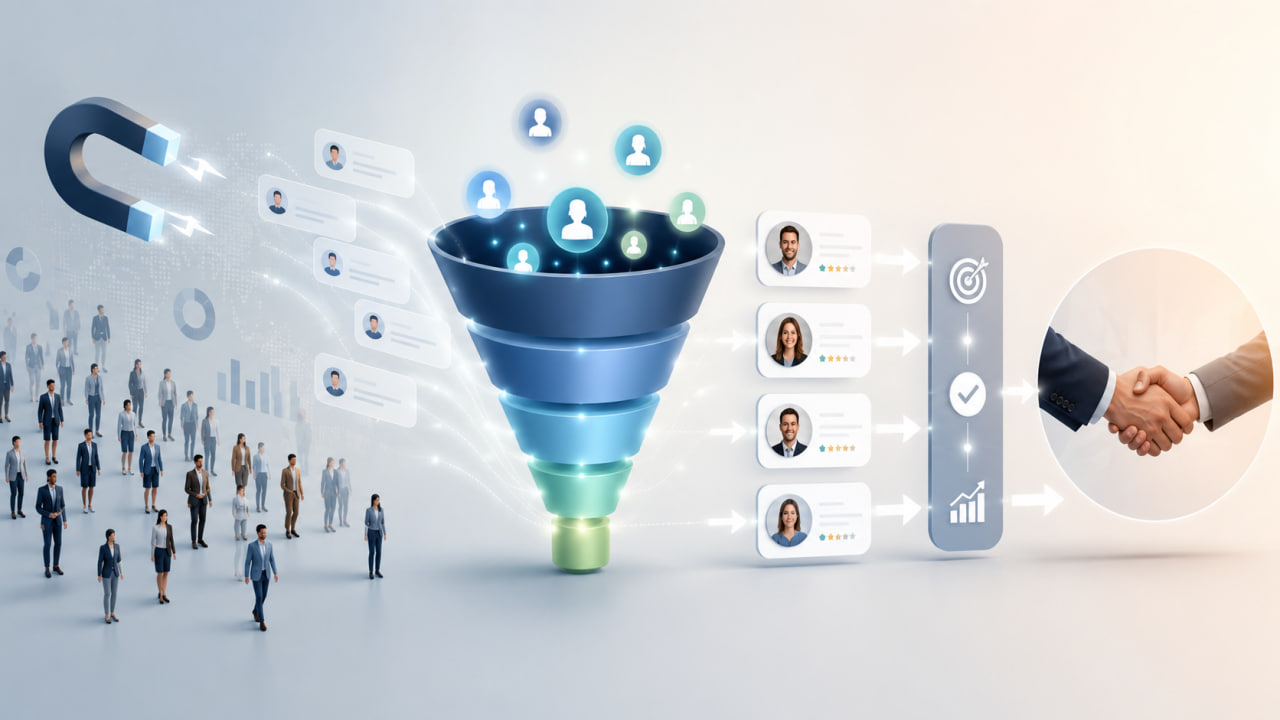
SaaS marketing has a different pressure profile than traditional B2B marketing. The sale is not the finish line. A customer can sign up, fail to activate, miss the product’s value, downgrade, or churn before the company earns back the cost of acquisition. That is why serious SaaS marketing connects the full journey: positioning, acquisition, onboarding, activation, retention, expansion, and customer advocacy.
In 2026, the SaaS market is more crowded, buyers are more careful with budgets, and teams are less impressed by broad promises. They want to know exactly what the software solves, how fast it can be implemented, what it replaces, how it fits the existing stack, and whether it will save time or create new work. Strong SaaS marketing answers those questions before a demo request.
Start With a Clear SaaS Position
A SaaS product usually has many features, but a market only remembers a narrow promise. The first job is to define who the product is for, what pain is urgent, what outcome matters, and why the product is better than the current workaround. This is where many SaaS companies lose volume. They describe modules, dashboards, automation, and integrations, but they do not explain the business reason to switch.
| Positioning Element | Weak Version | Stronger Version |
|---|---|---|
| Audience | Built for modern teams | Built for B2B revenue teams managing long sales cycles |
| Problem | Improve productivity | Reduce manual handoffs between marketing, sales, and customer success |
| Value | Save time with automation | Cut repetitive admin work and help teams act on pipeline signals faster |
| Proof | Easy to use | Live onboarding, CRM integration, adoption tracking, and clear success metrics |
Build Around the SaaS Funnel
A healthy SaaS funnel is not just traffic, leads, and demos. It must show whether the right people reach the product, understand the value, activate successfully, and stay long enough to expand. For product-led SaaS, that may mean free trial starts, workspace creation, first key action, invited users, and upgrade rate. For sales-led SaaS, it may mean qualified demo requests, opportunity creation, sales cycle length, close rate, and onboarding completion. This is why SaaS planning should connect with customer acquisition, not just surface-level campaign activity.
| Stage | Marketing Role | Useful Metric |
|---|---|---|
| Awareness | Explain the category, pain, and reason to change | Relevant organic traffic, branded search, engaged sessions |
| Acquisition | Convert demand through landing pages, trials, demos, and offers | Signup rate, demo rate, cost per qualified lead |
| Activation | Help users reach the first meaningful product outcome | Trial activation, first key action, onboarding completion |
| Retention | Reinforce usage, education, and product value | Churn, renewal rate, active accounts, feature adoption |
| Expansion | Create reasons to upgrade, add seats, or deepen use cases | Expansion MRR, account growth, customer lifetime value |
Use Content to Remove Buying Friction
SaaS content should do more than attract search traffic. It should reduce uncertainty. The most valuable assets are often product-led pages: use case pages, integration pages, comparison pages, migration guides, pricing explainers, security pages, onboarding guides, and customer stories. These pages convert because they answer questions close to purchase.
For example, a buyer comparing three platforms may not need another broad article about “how to improve workflow.” They need to know what happens during implementation, what data syncs, how permissions work, how pricing scales with users, and what support looks like after launch. That is where SaaS marketing becomes practical. It turns product detail into buyer confidence and works best when it is supported by strong content marketing instead of disconnected blog publishing.
Balance Product-Led and Sales-Led Motion
Many SaaS companies do not fit neatly into one model. A small customer may want a trial and self-serve onboarding. A larger account may need a demo, security review, procurement support, and stakeholder education. The marketing strategy should support both motions without confusing the buyer. The website can offer a fast trial path while still giving enterprise buyers enough proof to book a serious conversation.
| Motion | Best For | Marketing Focus |
|---|---|---|
| Product-led | Users who can test value quickly | Clear signup path, onboarding emails, in-product education, activation content |
| Sales-led | Complex teams, high ACV, multi-stakeholder deals | Demo pages, proof assets, ROI content, security details, comparison material |
| Hybrid | SaaS products serving both SMB and enterprise buyers | Segmented CTAs, role-based pages, usage signals, strong CRM handoff |
Pricing Communication Matters
SaaS pricing is part of marketing. If buyers cannot understand what they get, when they pay more, or which plan fits them, they hesitate. The best pricing pages reduce anxiety. They explain plan differences in plain language, show limits clearly, connect features to use cases, and make the next step obvious. Hidden pricing can work for enterprise deals, but only when the page still explains value, qualification, and what happens after contact.
A pricing page should not feel like a spreadsheet. It should help the buyer make a decision. That means stronger plan names, short explanations, proof near the CTA, answers to common objections, and direct paths for trial, demo, or sales contact. These pages also become stronger when they are connected to SEO for technology companies, because buyers often search for pricing, alternatives, integrations, and implementation details before they speak with sales.
Measure Growth With SaaS Economics
SaaS marketing should be judged by quality of growth, not surface activity. High traffic means little if users do not activate. A low cost per lead means little if accounts churn quickly. A strong strategy tracks CAC, payback period, MRR, ARR, activation rate, expansion revenue, churn, pipeline velocity, and customer lifetime value. These numbers show whether marketing is creating revenue that can compound.
The practical target is not to make every channel look good. It is to understand which channels bring customers who adopt, stay, and expand. SEO may create efficient long-term demand. Paid search may capture active buyers. Webinars may influence enterprise accounts. Email may improve activation. Customer education may reduce churn. Each channel needs a role in the system, and that role should be measured through clear marketing analytics instead of isolated campaign reports.
Make SaaS Marketing Operational
The best SaaS marketing teams work close to product, sales, and customer success. Product shows what users actually do. Sales shows what buyers resist. Customer success shows why accounts renew or churn. Marketing turns those signals into better pages, campaigns, onboarding flows, product education, and expansion messages.
SaaS marketing in 2026 is not about louder promotion. It is about clearer positioning, cleaner buyer journeys, stronger product education, and tighter revenue measurement. The brands that grow well are the ones that help prospects understand the value before purchase and help customers realize that value after purchase. That is where email marketing becomes useful, because onboarding, education, renewal, and expansion all depend on timely messages that help users keep moving forward.