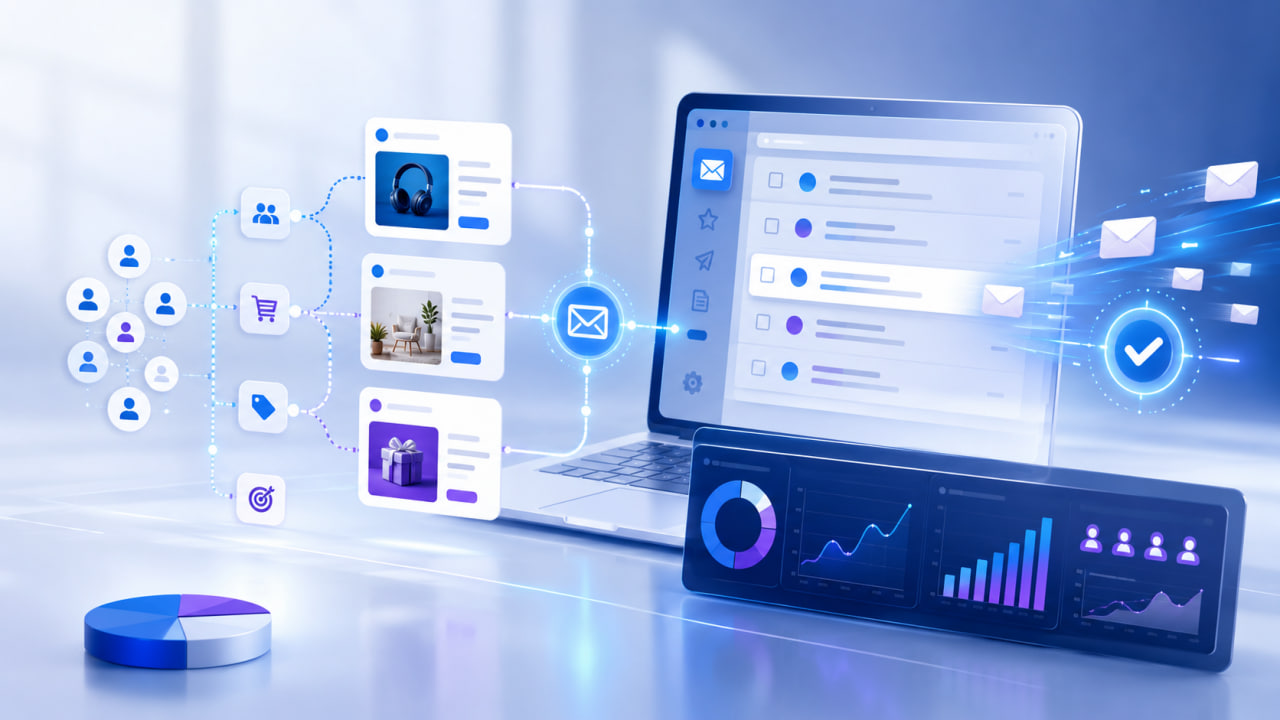
Email marketing is still one of the most useful channels in B2B, but only when it is built around relevance. In 2026, buyers ignore broad newsletters, generic nurture sequences, and automated messages that sound the same for every role. They respond when the email understands their problem, timing, product interest, and next logical step.
For technology brands, email should not be treated as a weekly broadcast. It should work across the full lifecycle: lead nurturing, demo follow-up, onboarding, product education, retention, renewal, and expansion. A good email system makes the buyer journey feel clearer, not heavier, and it can support stronger lead generation when every message is connected to real buyer intent.
What Email Marketing Should Do
| Email Type | Purpose | Useful Metric |
|---|---|---|
| Lead nurture | Move early interest toward product understanding | Reply rate, demo-page visits, assisted conversions |
| Demo follow-up | Reinforce value, proof, and next steps after contact | Meeting progression, opportunity rate |
| Onboarding | Help users reach the first meaningful outcome | Activation rate, first key action, setup completion |
| Customer education | Increase adoption, retention, and product depth | Feature usage, renewal rate, expansion revenue |
Segmentation Is the Real Advantage
The strongest email programs do not send the same message to every contact. They segment by role, company type, lifecycle stage, product interest, behavior, and sales readiness. A CTO may care about integration, security, and implementation. A marketing leader may care about pipeline visibility. A finance stakeholder may care about cost, risk, and payback.
The more specific the segment, the more useful the message can become. This does not mean writing hundreds of emails. It means building a clear logic: who is the person, what have they shown interest in, what do they need to believe, and what should happen next?
Automation Should Support the Buyer
Automation is valuable when it reacts to real behavior. A downloaded guide may trigger practical education. A pricing-page visit may trigger a clearer commercial offer. A missed demo may trigger a short recap and an easier booking path. A new customer may receive onboarding steps based on setup progress.
Weak automation creates noise. Strong automation removes friction. It gives the right person a useful message when their behavior shows a reason for it. The quality of that message often depends on the strength of the wider content marketing system behind it, because email needs useful assets, not just subject lines and templates.
How to Measure Email Marketing
Open rate is not enough. Useful email reporting looks at clicks, replies, conversions, meetings created, pipeline influence, activation, retention, and revenue. A smaller campaign to the right audience can outperform a large send if it creates qualified conversations.
Email marketing works best when it connects with content, CRM data, product signals, and sales feedback. When those pieces work together, email becomes more than a channel. It becomes a system for building trust, educating buyers, and moving revenue forward. To understand that impact clearly, teams should connect email performance with marketing analytics instead of judging campaigns by opens alone.